
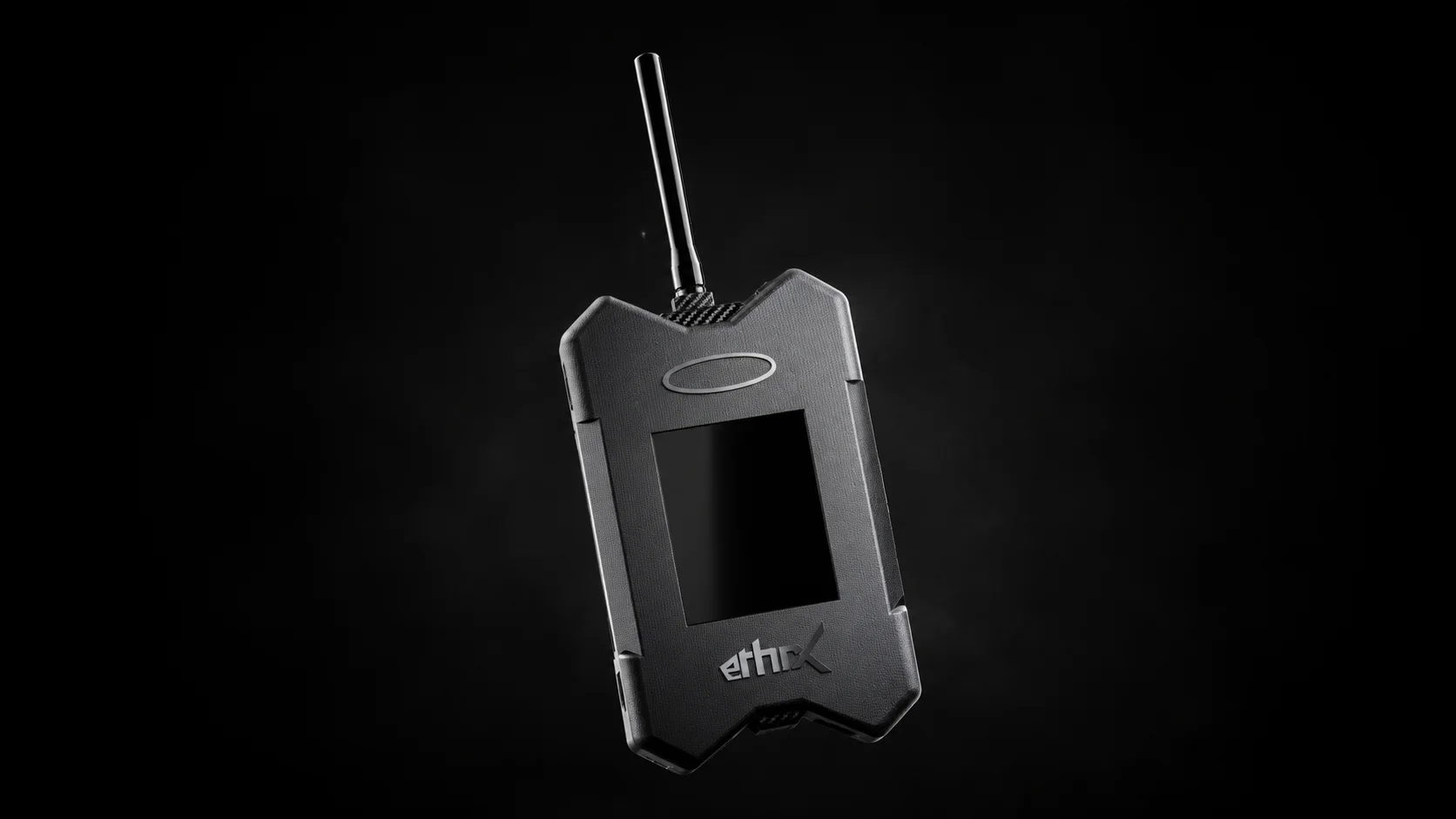
Built for DDIL.
HALO treats denied, disrupted, intermittent, and limited connectivity as the design baseline, not the failure case. There is no hub to protect: each node routes for its neighbors, and when one drops, the mesh re-forms around the loss. That behavior is the product — watch it happen.
Private, decentralized, self-healing long-range connectivity. No carrier required, no coordinator elected.
Edge command workflows native to the platform — see, decide, and act from the field, with nothing routed home.
Fixed sites, vehicles, and expeditionary kits — including elevated relay from our AIR platform.
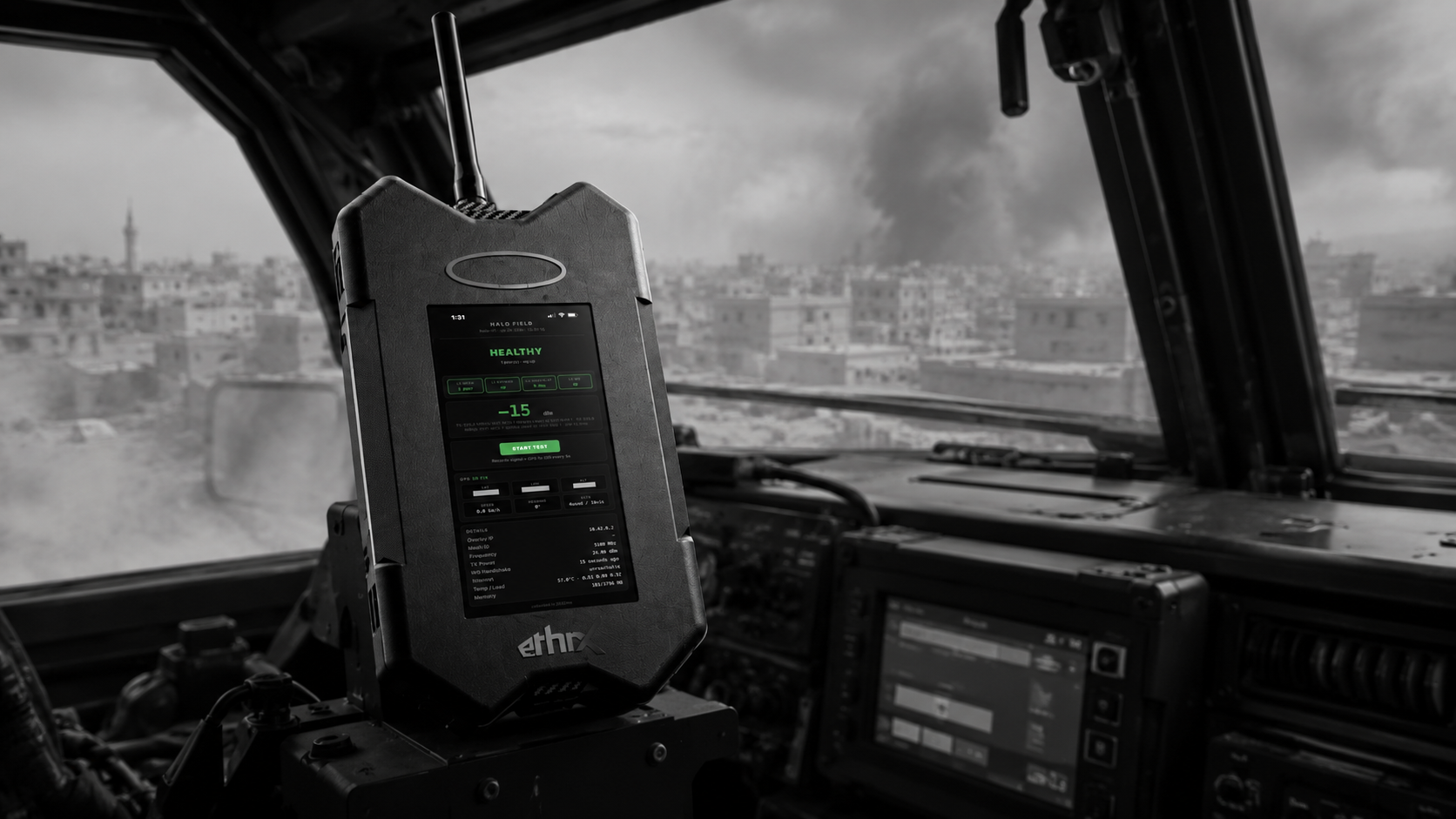
What HALO changes
in the field.
If you own a site no carrier covers, a grid that just went down, or an operation that can't put its traffic on someone else's network — this is what HALO does about it, and where it breaks from the mesh systems you've already tried.
Command built in, not bolted on
Most mesh moves traffic and stops there — command tools are someone else’s integration project. HALO builds edge command into the node itself: status, positions, feeds, and control, with no extra servers to haul and no cloud in the loop.
No coordinator to lose
Much of what’s sold as mesh still hangs off a gateway, base station, or master node — take that out and the network degrades. Every HALO node is a full peer. The demo above is the architecture, not a feature flag.
Yours outright
No subscriptions, no accounts, no per-node service plan, no vendor backend carrying your traffic. Systems tethered to somebody’s cloud stop being yours the day the contract does. HALO’s network exists entirely in the field, owned end to end.
Carried, not engineered
Tactical mesh typically arrives with an RF engineer attached. HALO stands up in minutes by the people who carry it — and integrates with the end-user devices and mission systems you already field.
Every node is
an I/O platform.
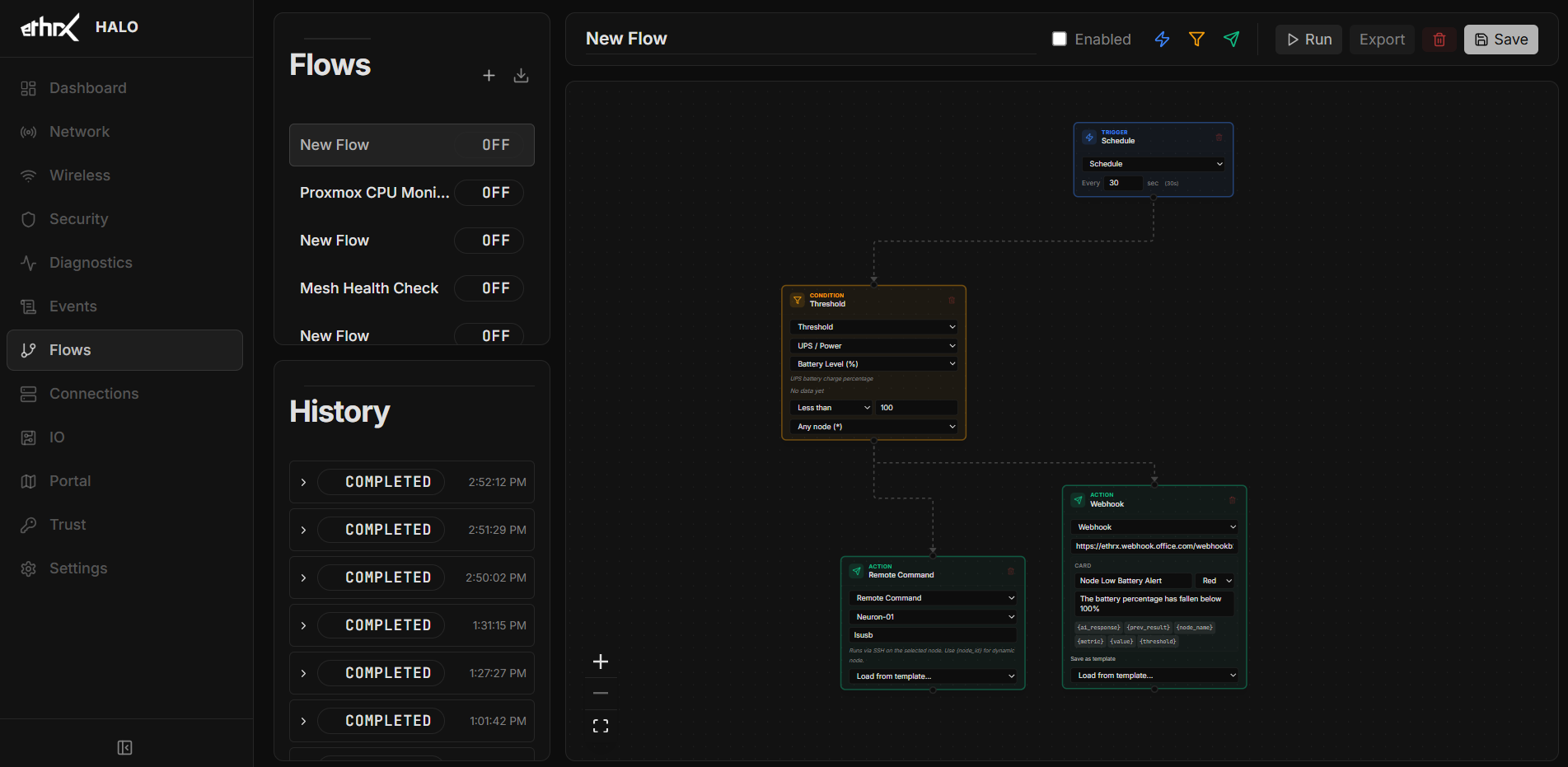
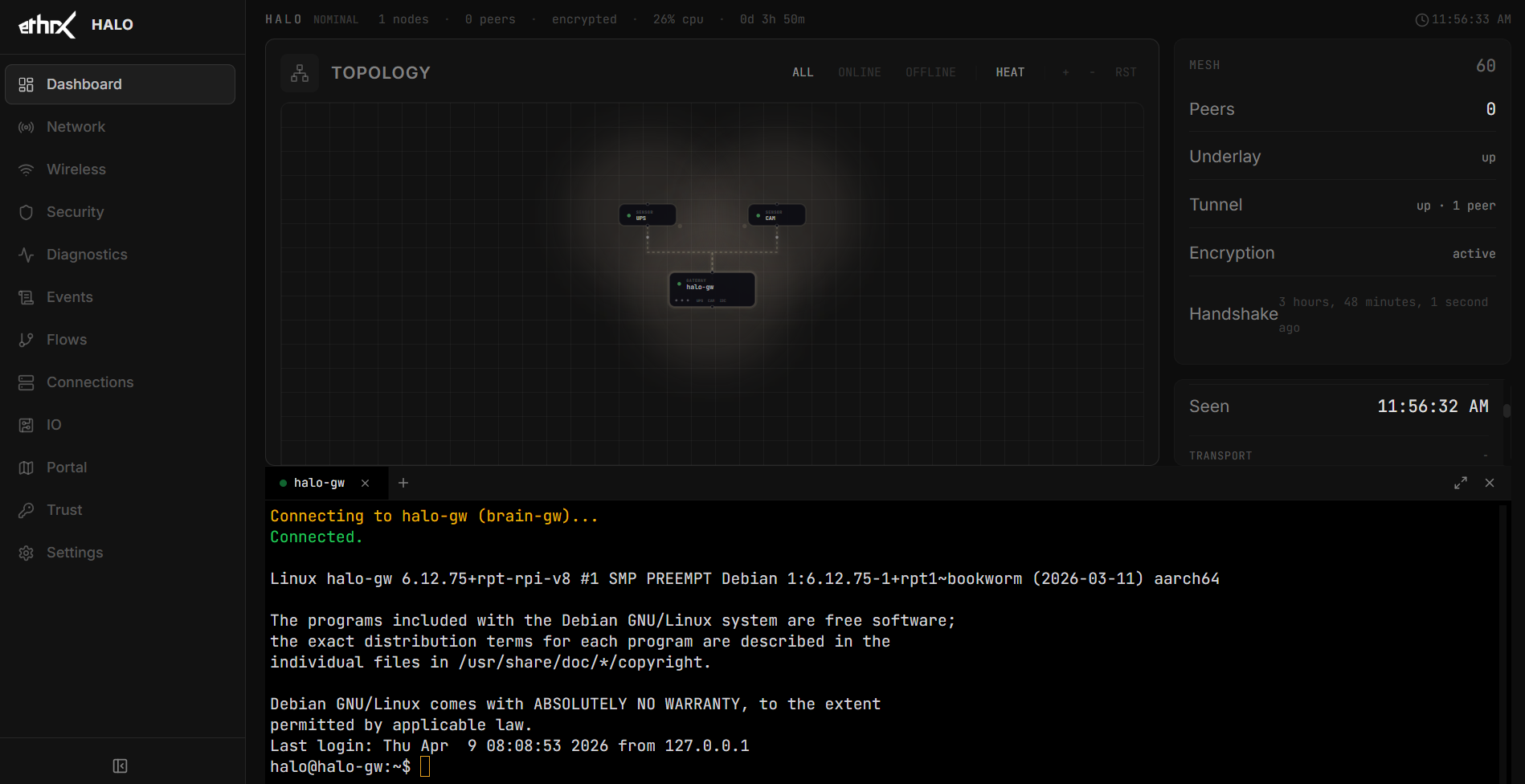
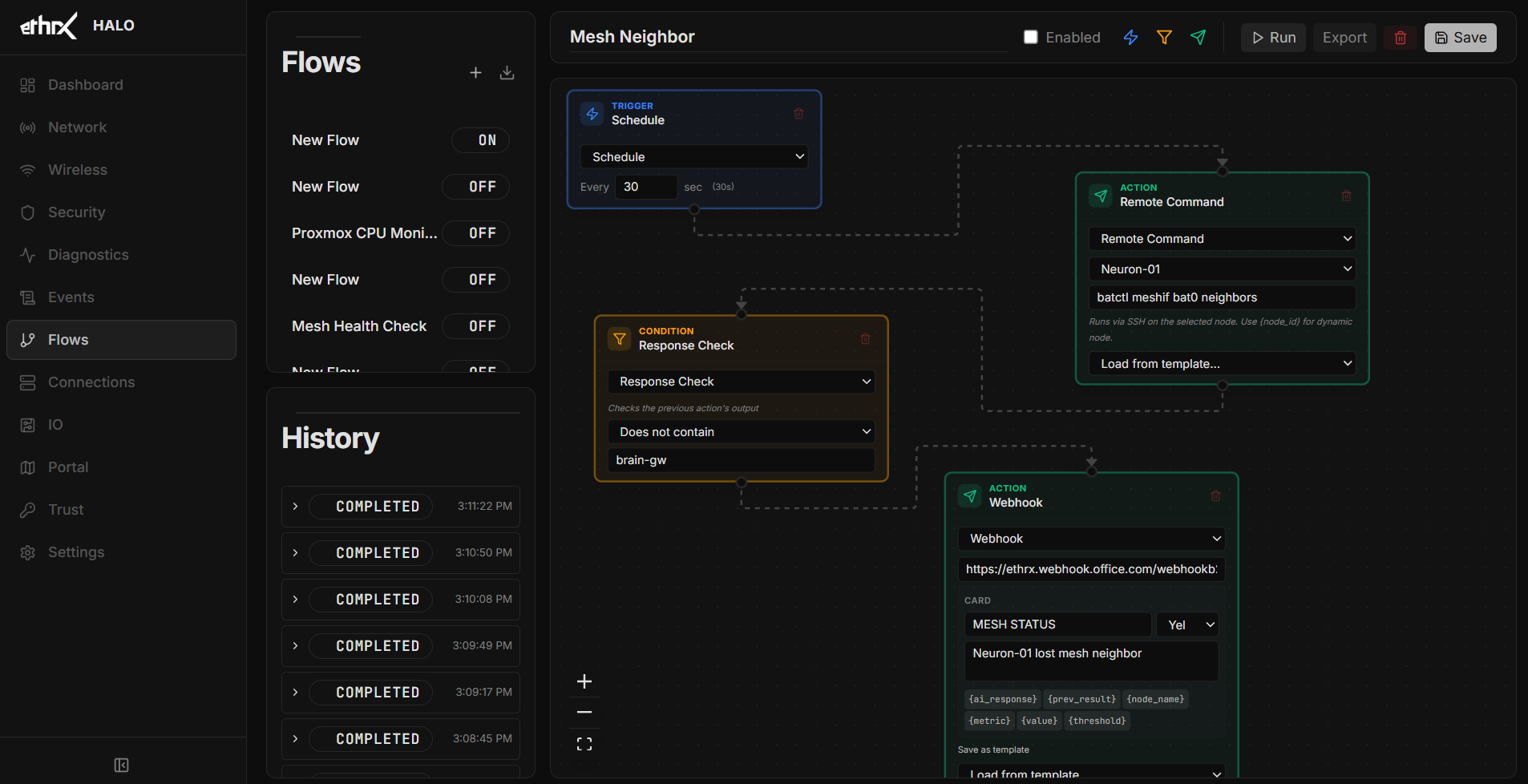
Command lives on the node, not in a distant cloud — and it goes well past comms. Nodes read I2C sensors and camera feeds and publish them over mesh telemetry streams, orchestrate I2C signals for full IO automation, and run Flows — a no-code interface for data collection and triggered actions that an operator builds in the field, not a developer builds in a sprint. The entire platform speaks OpenAPI, so any standard endpoint can feed it triggers or take its outputs.
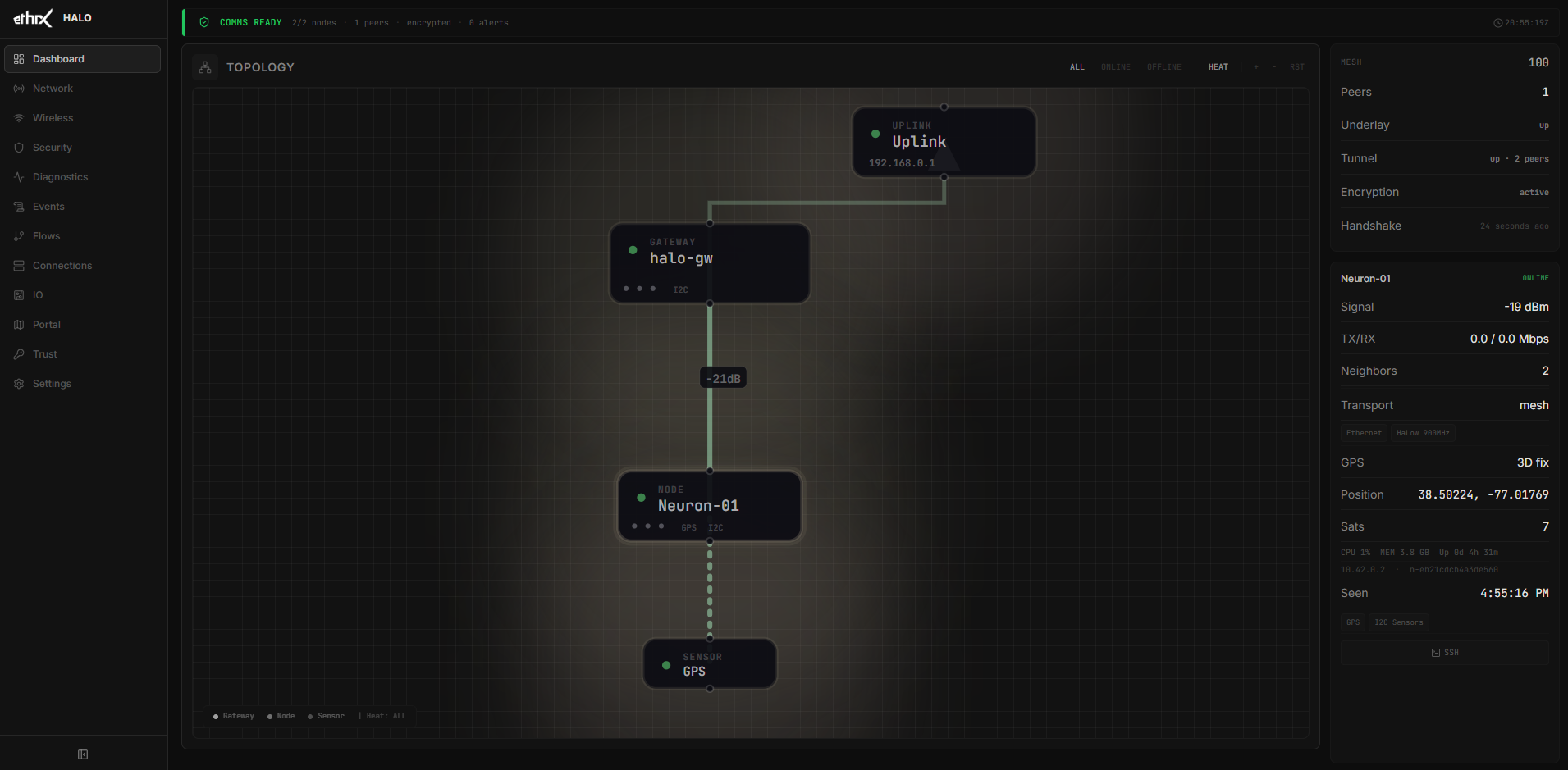
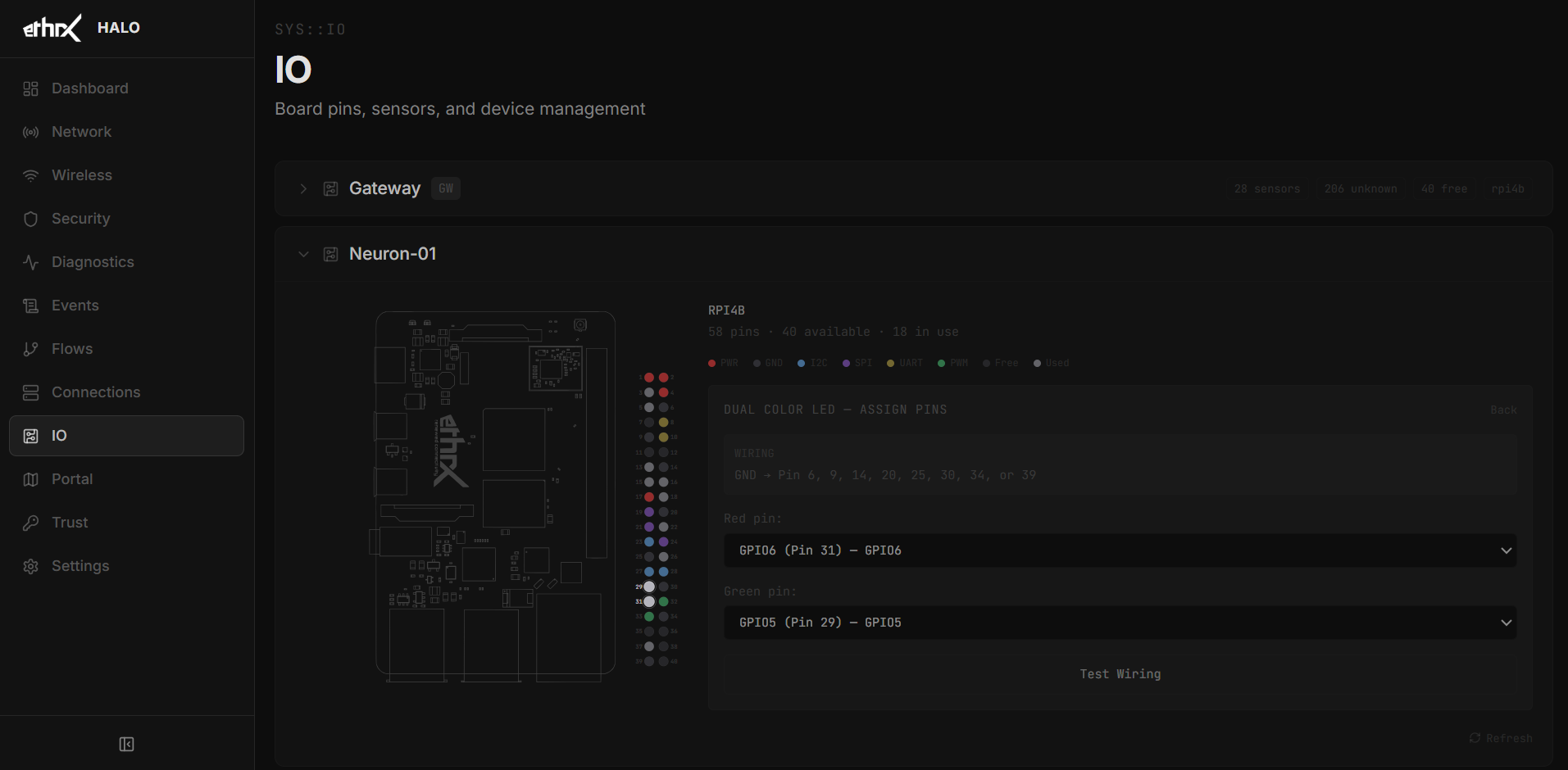
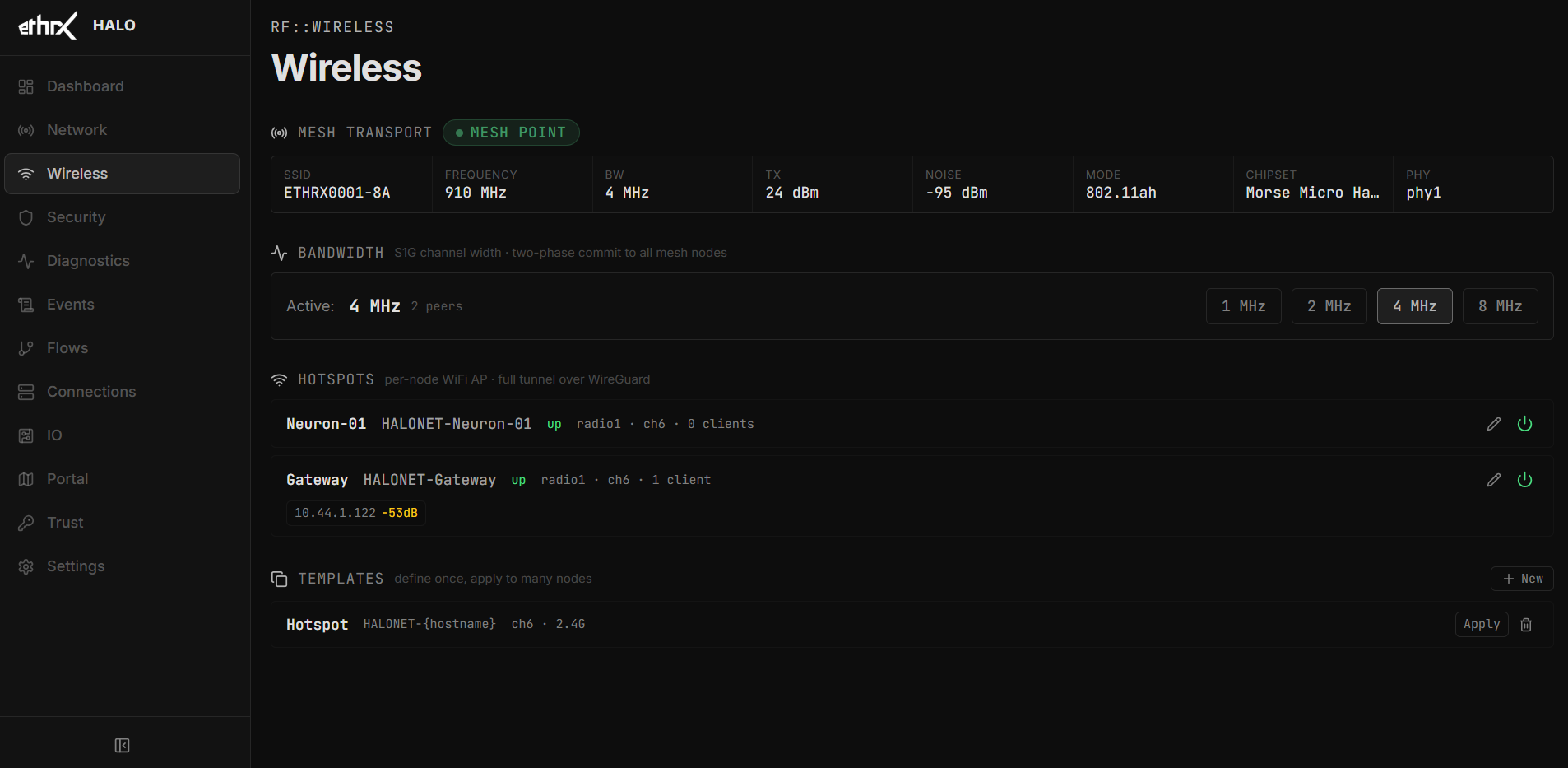
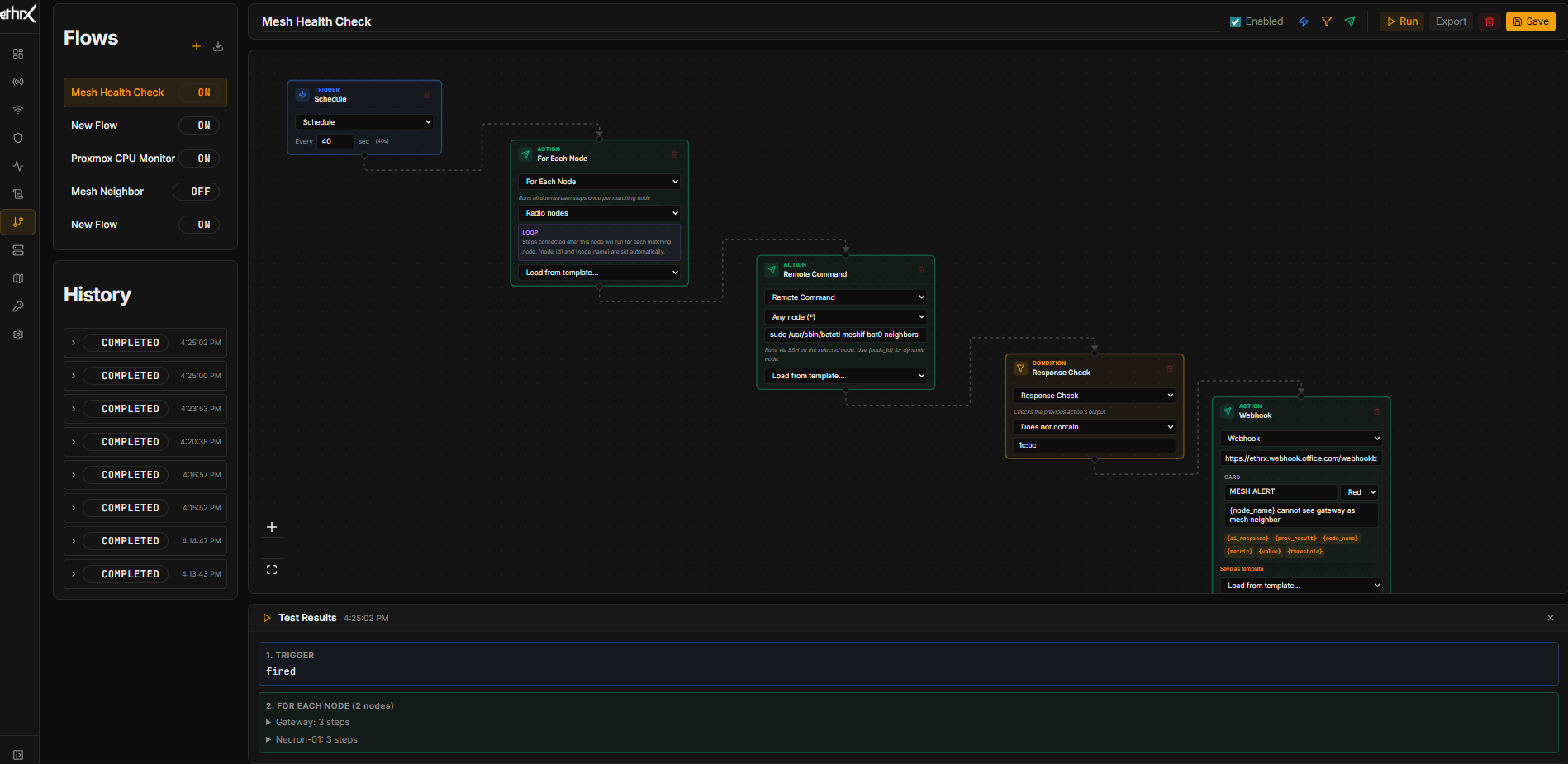
I2C sensors and camera feeds published over mesh telemetry streams — every node doubles as a sensor gateway.
Orchestrate I2C signals from the platform — read, trigger, and drive hardware in the field.
Drag-and-drop automation for data collection and triggered actions — built by the operator who needs it.
Interfaces with any OpenAPI-standard endpoint — external systems feed triggers in or take data out.
In active
development.
HALO is built the way we build everything: against real requirements, funded by our own services revenue, and proven in pilot deployments before it ships wide. That model is deliberate — this is not a product looking for a market, and the requirements shaping it come from the people who will carry it. If you own one — a field gap, a directive, a program need — this is the stage where a partner shapes what ships. Bring the mission. We'll show you what's running.